Nigeria’s Senate has approved fresh external borrowing requests by President Bola Ahmed Tinubu, paving the way for the Federal Government to access up to $6 billion in new financing for infrastructure, budget support, and debt management.
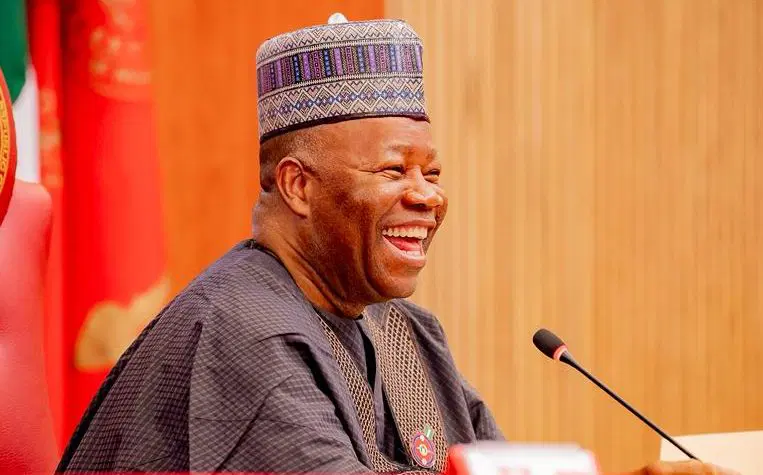
The approval followed the presentation of a report by Senator Aliyu Wamakko, Chairman of the Senate Committee on Local and Foreign Debts, during plenary on Tuesday.
The request was contained in two separate letters sent by President Tinubu to the President of the Senate, Senator Godswill Akpabio, and read before lawmakers.
In the first request, Tinubu asked the National Assembly to approve the establishment of a Structured Total Return Swap (TRS) external financing programme worth up to $5 billion with First Abu Dhabi Bank.
According to the President, the facility would be disbursed in phases and used to support budget implementation, fund priority infrastructure projects, and help the government repay some of its more expensive domestic and foreign debts.
He explained that the funding arrangement would also give the Federal Government room to respond to urgent financial obligations when necessary.
Tinubu also disclosed that Nigeria’s total public debt stood at $110.3 billion, which is roughly ₦159.2 trillion, as of December 31, 2025. He argued that drawing the facility in tranches would help reduce immediate pressure on the nation’s debt burden and debt servicing obligations.
In a second request, the President sought Senate approval for the issuance of naira-denominated Federal Government securities to serve as collateral for the financing arrangement, as well as the payment of related margin obligations in US dollars.
He also asked lawmakers to approve a separate $1 billion UK export finance facility being arranged through Citibank.
According to the letter, the loan would be used specifically for the reconstruction and rehabilitation of the Lagos Port Complex and Tin Can Island Port, two major assets considered critical to Nigeria’s trade and logistics sector.
The approval comes at a time when concerns are growing over Nigeria’s rising debt profile, with many observers warning that while borrowing may support infrastructure and short-term government spending, it must be matched with visible economic returns and stronger revenue generation.
For now, the Senate’s decision gives the Tinubu administration the green light to proceed with another major round of external financing.