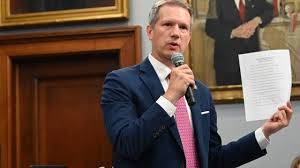
A United States congressman, Mark Harris, has called on Marco Rubio to consider sanctions and other diplomatic measures against Nigeria over what he described as a worsening pattern of violence against Christians.
In a letter dated April 2, Harris said the situation in Nigeria and Syria now requires urgent international attention, arguing that repeated attacks on Christian communities should not be dismissed as mere instability or routine insecurity. He framed the issue as one of religious freedom, human dignity and government responsibility, saying Christians in both countries are being “terrorized, displaced and killed for their faith.” Reports published Thursday say Harris specifically referenced the recent killings in Plateau State and asked what the U.S. government is prepared to do if authorities fail to act decisively.
What makes this politically sensitive is that Harris is not just asking for statements or condemnation. He is pushing for real pressure — including possible sanctions, visa restrictions, aid conditions and tougher diplomatic consequences. In his view, governments that fail to protect religious minorities should not be treated like they are doing enough when people are still being attacked repeatedly.
He also referenced the Palm Sunday killings in Plateau, describing them as part of a broader anti-Christian pattern rather than an isolated tragedy. Multiple reports this week confirmed that at least dozens of people were killed in the latest attack in the Jos area, though accounts vary slightly on the exact death toll. That means Harris is tapping into an issue that is already attracting global religious freedom attention, especially during Holy Week.
But this is where the conversation becomes more complicated. The violence in Nigeria, especially in the Middle Belt, is often reported internationally as purely religious persecution, while many local analysts also point to a messy mix of ethnic conflict, land disputes, banditry, weak state response and communal retaliation. That does not make the killings less serious. It just means the reality is more layered than many foreign political narratives sometimes present it.
Still, Harris’s letter matters because it could add to growing pressure inside Washington for Nigeria to be treated more harshly on religious freedom grounds. The U.S. Commission on International Religious Freedom already recommended that Nigeria be redesignated as a Country of Particular Concern (CPC) in 2026, arguing that the country continues to tolerate severe violations of religious liberty.
If this pressure grows, the bigger question for Nigeria will not just be whether the government rejects the accusation. It will be whether it can honestly show that it is doing enough to stop the repeated killings that keep giving foreign lawmakers fresh reasons to intervene.
Because once a country keeps producing the same headlines — dead civilians, weak accountability, and preventable bloodshed — it becomes harder to convince the world that the crisis is “under control.”