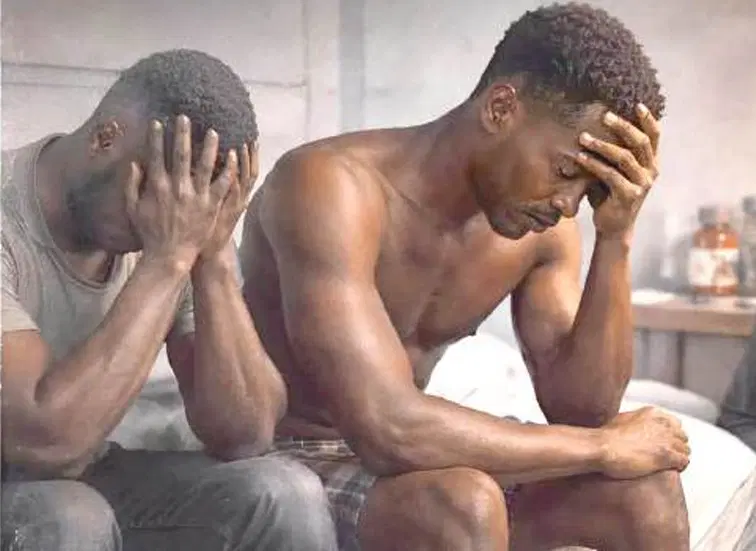
If you drive through some parts of Lagos, you’ve likely seen them — those bold, impossible-to-ignore words painted on road dividers and walls: “Longer. Stronger. Permanent.” At first, they may look like just another random street advert. But behind those words is a troubling reality many Nigerian men are silently battling.
What used to be a private insecurity has now become public. Penis enlargement is no longer something whispered about in corners. It is now everywhere — on walls, WhatsApp statuses, Facebook ads, TikTok videos, roadside posters, and even spam emails. The promise is always the same: more size, more confidence, more satisfaction, more respect. But for many men, that promise has ended not in confidence, but in pain, shame, and hospital visits.
Across Nigeria, doctors are seeing more cases of men arriving with serious complications after trying pills, injections, herbal mixtures, and stretching devices sold as “quick fixes.” Many of them do not come early. They wait, hoping the pain will pass, embarrassed to speak up. By the time they finally seek help, the damage is often already severe.
For 30-year-old mechanic, Tunde Onoja, the pressure built slowly. Seeing those messages daily and hearing conversations around him made him feel like everyone else was somehow “improving” except him. Even though he admitted he did not think he was abnormally small, he still wanted more — especially because his fiancée often complained about his size. Encouraged by a friend and convinced by glowing testimonials on WhatsApp, he started trying different concoctions and injections.
At first, one of the injections seemed to work. But that relief did not last. Soon after, things went terribly wrong. He said what followed affected not just his body, but his confidence and relationship. He withdrew from his partner and was left emotionally shattered. According to him, by the time the complications became obvious, even the hospital could not fully reverse what had happened.
Celestine Obike’s story carries a different kind of pain. At 40, he had spent much of his adult life convinced that his small penis meant he could never have a normal relationship or even father children. He said the fear of rejection made him avoid women and intimacy entirely. One day, while driving along Gbagada Expressway, he saw a handwritten penis enlargement advert. Later, he started seeing more of the same on Facebook. Surgery seemed too expensive, so he turned to cheaper alternatives being sold without any medical backing.
That decision nearly cost him everything. He later developed severe pain and had to be rushed to a private hospital before being referred for specialist care. Medical checks reportedly revealed nerve damage and tissue tears linked to what he had used. He believes he survived only because he got medical help when he did.
For Samuel Adebayo, the pressure had followed him for years. The 35-year-old Business Administration graduate said he had never been able to build serious romantic relationships because of how he felt about his body. When he saw a Facebook ad promising guaranteed enlargement, complete with “before and after” pictures, he decided to try it. Within days, his skin reacted badly. He developed rashes, burns, and intense irritation. By the time he finally went for treatment, he needed weeks of care to recover from what turned out to be chemical injuries.
Another victim, Ibrahim, said his own ordeal began with one of those familiar spam messages claiming to offer “clinically proven” penis enlargement pills. After taking them, he experienced dizziness, heart palpitations, and dangerously high blood pressure. What was sold to him as a harmless solution became a health emergency. He said he came frighteningly close to losing his life.
Then there is Emeka Anyanwu, a trader from Port Harcourt, who bought a traction device after seeing it promoted by a TikTok influencer. He had no idea that improper use could bruise tissue, restrict blood flow, and trigger long-term sexual dysfunction. After using it, he developed bruising and a painful erection that refused to go down. Out of fear and shame, he first turned to friends instead of a hospital. They tried all sorts of things before finally urging him to seek proper help. By the time he got to the hospital, he had already been through hours of intense pain and ended up admitted for days.
These stories may sound extreme, but Nigerian urologists say they are becoming more common. What many people do not realise is that the penis enlargement market is feeding on insecurity, not science. Most of the products being advertised have no proven medical benefit. In many cases, they are not even properly regulated. Yet they are sold with the confidence of real medicine and the urgency of something men are made to feel they must “fix.”
Medical experts say one of the biggest lies driving this trend is the belief that most men are too small. That is simply not true. Research from established medical sources shows that most men who seek enlargement already fall within the normal range. A true micropenis is medically rare and affects less than one percent of men globally. In other words, the overwhelming majority of men chasing enlargement are not medically abnormal — they are simply trapped in comparison, shame, and misinformation.
Studies have repeatedly shown that most enlargement methods either do not work at all or only produce temporary effects while risking long-term damage. Pumps may create short-lived swelling, but overuse can damage tissue. Pills and injections often contain unknown substances. Devices can bruise, stretch, or injure delicate structures. The body is not a machine you can keep forcing beyond its natural design without consequences.
The emotional damage is often just as serious as the physical one. Men who go through these experiences often end up struggling with confidence, anxiety, shame, depression, and sexual fear. Some withdraw from relationships entirely. Others are left carrying emotional wounds long after the physical injuries begin to heal.
Speaking on the issue, UK-based Nigerian consultant urologist and founder of the Prostate Clinic in Lagos, Prof. Kingsley Ekwueme, said most men looking for enlargement are already medically normal. According to him, what social media has done is to magnify old insecurities and make them feel like a crisis.
He explained that many men wrongly judge themselves by appearance, often looking down at their bodies from an angle that distorts reality. He stressed that there is no pill, supplement, injection, or herbal mixture scientifically proven to lengthen the adult penis. Even when surgery is considered, he warned that it is widely misunderstood and comes with real risks, including nerve damage, loss of sensation, and permanent erectile dysfunction.
Prof. Ekwueme also raised concern about fake online promotions, revealing that even his own face and voice have allegedly been cloned using AI to advertise fraudulent products. That alone shows how dangerous and sophisticated this market has become. It is no longer just about roadside quacks; it is now a digital trap built to exploit vulnerable men.
Backing this up, Dr. Gabriel Ogah, Vice-President of the Nigeria Association of Private Medical Practitioners, said cases involving serious complications have risen sharply in recent years. According to him, some men now present with prolonged abnormal erections, urethral injuries, penile fractures, and even permanent impotence after trying unregulated remedies. He warned plainly that once the penis is stretched or damaged beyond its natural elastic limit, recovery may never be complete.
He also made an important point many people still do not understand: penis size has little to do with fertility. A man does not need an unusually large penis to impregnate a woman. Fertility depends far more on sperm production and reproductive health than on size. Yet this myth continues to push many men into dangerous experiments that leave them far worse than they started.
What makes the situation even harder to control is the market itself. These products are sold in open markets, through private WhatsApp messages, via influencers, and on social media platforms where regulation is weak and fake testimonials spread quickly. Some sellers now use AI-generated doctor endorsements to appear credible. Even when agencies like NAFDAC try to clamp down, the sellers often stay one step ahead.
At the centre of all this is silence. Too many men are ashamed to ask questions, too embarrassed to see a doctor, and too influenced by unrealistic expectations sold online and on the streets. That silence is exactly what this dangerous industry depends on.
The truth is simple, even if many people do not want to hear it: not every insecurity needs a “solution,” especially when that solution is fake. Penis size does not define masculinity. It does not determine worth. And in many cases, the desperate chase for “more” is ending in regret, injury, and irreversible damage.
What Nigerian men need right now is not more false promises painted on road dividers. They need honest conversations, proper education, and the confidence to reject dangerous lies dressed up as medicine.