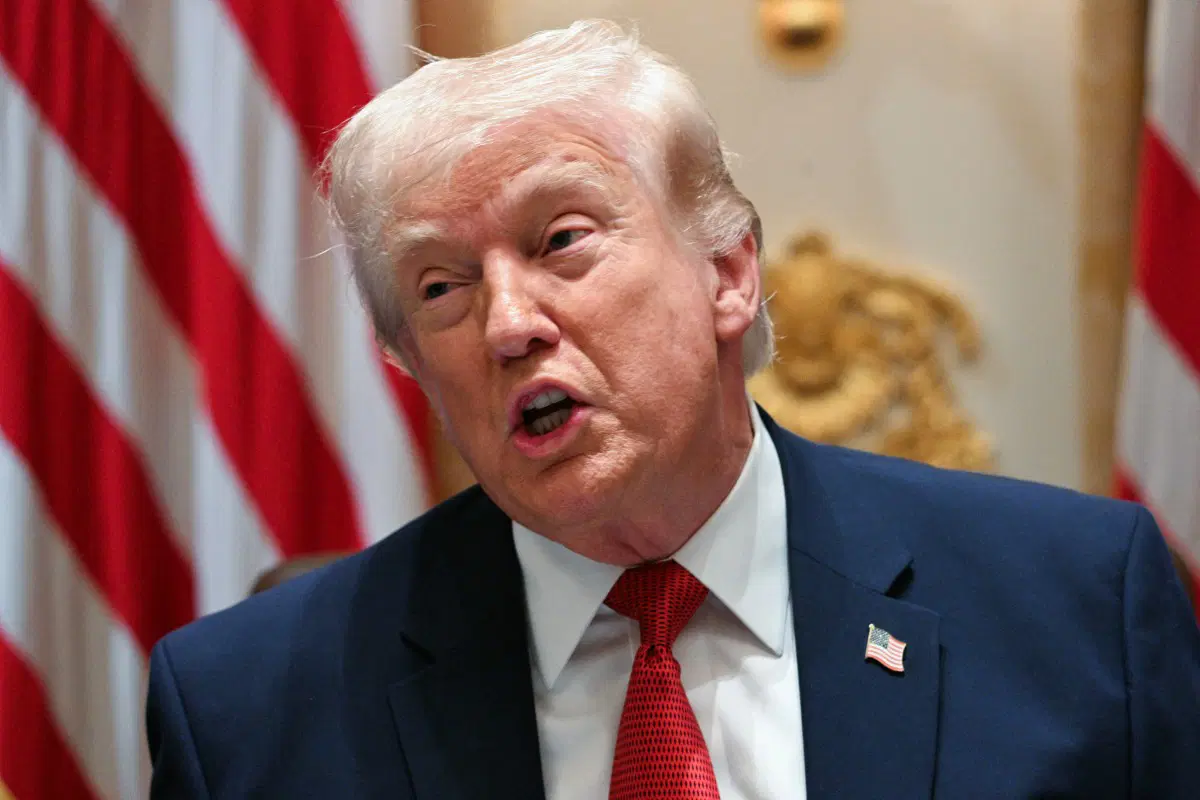
US President Donald Trump has claimed that several of Iran’s top military leaders were killed in what he described as a “massive strike” on Tehran, further raising tensions in an already explosive Middle East conflict.
In a post shared on his Truth Social platform on Saturday, Trump said many of Iran’s military commanders had been “terminated,” accusing them of leading the country “poorly and unwisely.” He also attached a video showing large explosions lighting up the night sky over what appeared to be a city, though he did not clearly state when the strike happened or provide official operational details.
The statement adds another dangerous layer to a war that has already stretched beyond a month and continues to shake the region. The conflict, which began with US-Israeli strikes on Iran, has since triggered waves of retaliation, military escalation, and serious global concern — especially around oil supply and regional security.
What makes Trump’s latest claim especially significant is not just the language he used, but the timing. It comes as the United States is reportedly still searching for a missing crew member from a downed American fighter jet, while tensions around the Strait of Hormuz remain dangerously high. That means this is not just political messaging anymore — it is unfolding in the middle of an active and highly volatile war.
Still, one major issue remains: independent confirmation is limited.
As of now, there has been no immediate detailed official breakdown publicly released in the reports reviewed on exactly which commanders were killed, how many were affected, or whether the strike was carried out directly by US forces, Israeli forces, or as a joint operation. So while Trump’s claim is dramatic and serious, it should still be treated with caution until more verified military or intelligence details emerge.
What is clear, however, is that the rhetoric is becoming even more aggressive.
Trump’s message signals that the conflict may be entering an even more dangerous phase — one where military leadership, infrastructure, and strategic pressure are now being openly targeted and publicly celebrated in real time. And when that happens in a region as sensitive as the Middle East, the consequences rarely stay local.
Right now, the world is watching not just for what has happened — but for what comes next