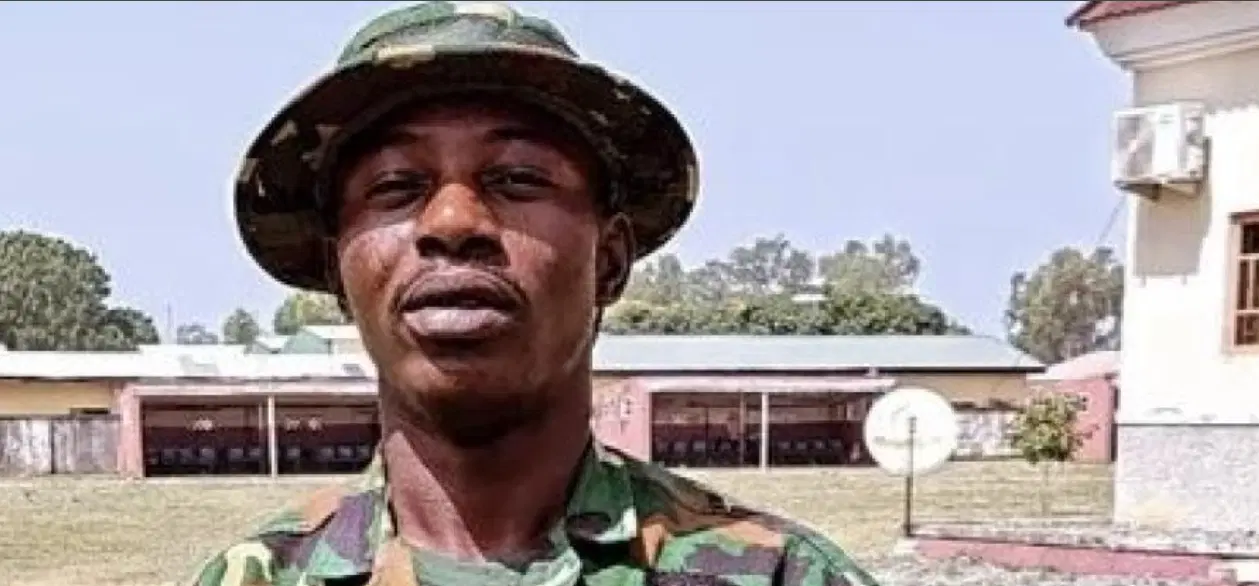
Dismissed Nigerian soldier Rotimi Olamilekan, popularly known as Soja Boi, has challenged the Nigerian Army to make its payroll public as the controversy over his claims on soldiers’ welfare and pay continues to intensify.
Olamilekan, a former lance corporal, made the challenge in a video posted on Tuesday, just hours after the Army publicly dismissed his earlier allegations as false, misleading, and damaging to the image of the institution.
In the video, he displayed bank transaction alerts which he claimed represented the actual earnings he received while serving in the military. According to him, his monthly salary stood at N112,061.59, while an additional N20,000 was paid as what he described as a “grumbling allowance.”
He further claimed that soldiers deployed to active conflict zones such as Maiduguri receive an extra N45,000 operational allowance, as well as N6,000 security allowance, but insisted that these are not regular entitlements for all soldiers. According to him, personnel not assigned to operational theatres only receive their base salary and the N20,000 allowance.
Speaking in Pidgin, Olamilekan insisted that his intention was not to tarnish the Army’s reputation but to reveal what he described as the reality of military welfare. He maintained that he was prepared to back his statements with evidence and encouraged Nigerians to ask serving soldiers or relatives in the military whether his claims were accurate.
He also renewed his earlier allegation that some personnel are often forced to purchase their own protective gear, including helmets and fragmentation jackets, rather than receiving them fully through official supply channels.
The Nigerian Army, however, has strongly rejected those claims. In an earlier statement, Army spokesperson Appolonia Anaele said the allegations were baseless and misleading.
According to the Army, uniforms, kits, weapons, and protective equipment are issued to personnel through established logistics systems, and no soldier is deployed for operations without the necessary protective materials. The Army also maintained that soldiers are paid consolidated monthly salaries along with uniform allowances, operational allowances, and other mission-related entitlements directly into their bank accounts.
The military further clarified that Olamilekan’s dismissal was not connected to the content of his public statements, but rather to repeated acts of indiscipline, including alleged violations of the Armed Forces’ social media policy and unauthorised appearances in the media.
At the moment, the issue remains one of competing narratives — one from a dismissed soldier claiming to expose uncomfortable truths, and the other from the Army insisting its welfare structure remains intact and properly managed.
What makes the situation more sensitive is that it touches on a subject many Nigerians already feel strongly about: the treatment, welfare, and morale of frontline security personnel.