Armed security operatives on Friday denied journalists access to the venue of a high-profile court-martial involving 36 military personnel accused of plotting to overthrow the administration of Bola Ahmed Tinubu.
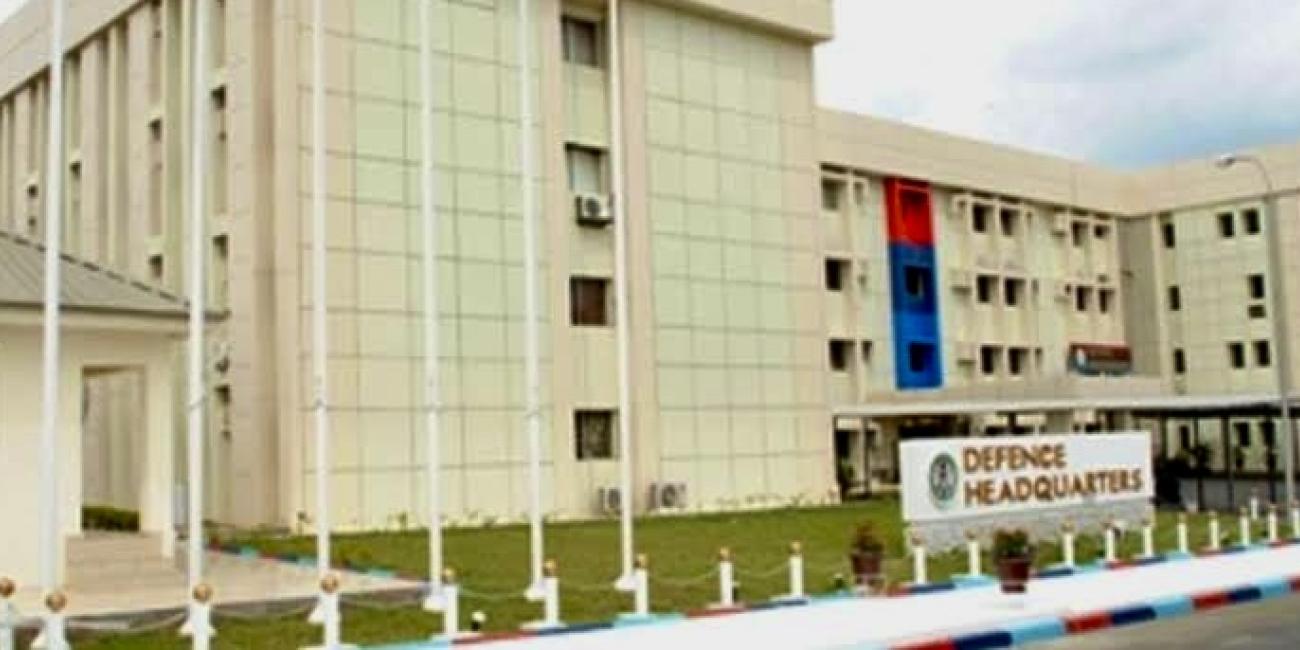
The trial, convened by the Defence Headquarters, is being held under tight security at the Scorpion Officers’ Mess in Asokoro, Abuja, with proceedings conducted behind closed doors.
Despite the significant public interest surrounding the case, media personnel were turned away without explanation, raising concerns about transparency within Nigeria’s military justice system.
Security at the venue was visibly heightened, with operatives enforcing strict access controls. Journalists were not only barred from entry but were also prohibited from using mobile phones and recording devices around the premises.
The General Court Martial (GCM), one of the largest in recent years, was formally established under the Armed Forces Act by an official order dated April 17, 2026. The order was signed by Major General AM Alechenu, who directed that the trial commence on April 23 at the Asokoro facility.
According to the directive, military police, naval police, air police, and Guards Brigade personnel were deployed to secure the venue, with stringent rules governing entry and conduct within the court premises.
The order also stipulated that only authorised court guards are permitted to carry arms, while all participants are subject to thorough search procedures before entry. Accused officers are to remain in custody under escort throughout the proceedings.
The 36 personnel facing trial cut across various ranks in the Nigerian Armed Forces, including senior officers such as Brigadier General MA Sadiq, Colonel MA Ma’aji, and several lieutenant colonels, majors, captains, and non-commissioned officers.
While the exact charges have not been publicly disclosed, they are reportedly linked to an alleged coup plot. The court order indicated that the charges would be served individually to each accused officer.
The closed nature of the proceedings, coupled with restrictions on media coverage, has sparked fresh debate over accountability and openness in military trials, especially in cases of such national significance.