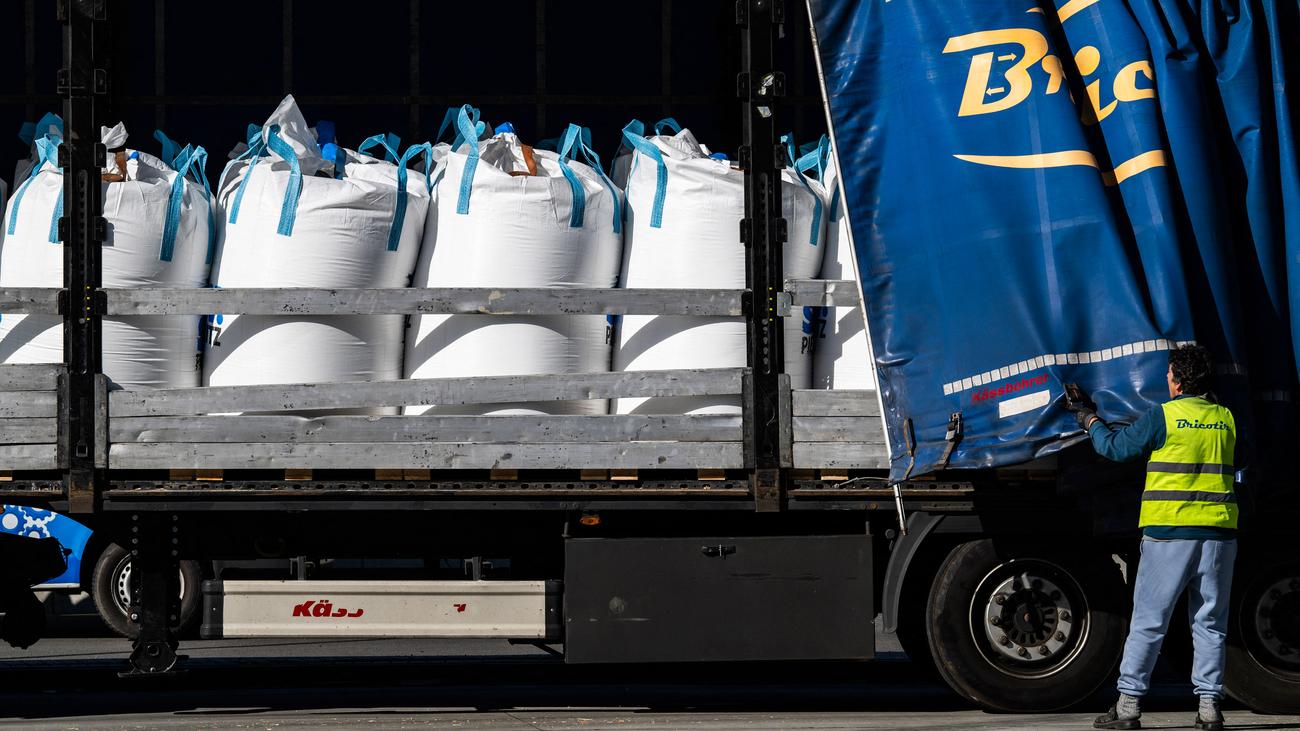
Fertilizer prices are rising as a result of the Iran war. Federal Agriculture Minister Rainer is calling for the abolition of European import tariffs on fertilizers.
This audio version was artificially created.
© John McDougall/AFP/Getty Images
In view of the high fertilizer prices as a result of the Iran war, the Federal Minister of Agriculture Alois Rainer (CSU) spoke out in favor of abolishing European import tariffs. Germany is committed “at the EU level to reduce costs,” said Rainer on the sidelines of a meeting with his EU colleagues in Luxembourg. The EU Commission had already done so before the war an abolition of tariffs on certain fertilizers suggested.
The older proposals concern Nitrogen-based fertilizers such as ureas and their raw materials from all countries except Russia and Belarus. High punitive tariffs apply to imports from these two countries. Russia in particular has traditionally been one of the most important fertilizer suppliers to European agriculture. With the Tariff abolition for all other countries The EU wants to relieve the burden on farmers and reduce dependence on Russia.
The countries of the Gulf region are important fertilizer producers
The countries of the Gulf region are also important fertilizer producers. About a quarter of the world’s ammonia and sulfur are produced here and a third of the urea needed for fertilizers. Urea prices rose by more than 40 percent in the first month of the Iran war, according to the Organization for Economic Co-operation and Development (OECD).
The North African states of Algeria, Morocco and Egypt are also important fertilizer suppliers for European agriculture. All tariffs have already been lifted for them as part of a free trade agreement.