Across the continent, momentum is building around efforts to liberalise air travel and make movement between countries easier. Backed by initiatives like the African Union’s aviation reforms and the African Continental Free Trade Area, governments are beginning to see aviation not just as a travel issue, but as a major driver of trade, tourism, and regional integration.
For years, Africa’s air transport system has struggled with fragmentation. Despite having over 1.4 billion people, the continent accounts for only about 2% of global air traffic, according to the International Air Transport Association. Travelling within Africa can be surprisingly difficult—expensive flights, limited direct routes, and visa restrictions often force passengers to transit through Europe or the Middle East just to reach neighbouring countries.
This weak connectivity continues to slow economic growth. Intra-African trade remains below 20%, far behind other regions, raising concerns that the continent’s ambitions under AfCFTA may not be fully realised without better transport systems. That is where the Single African Air Transport Market comes in—launched to open up African skies and encourage competition among airlines.
However, progress has been uneven. While more than 35 countries have signed on, some governments remain cautious, protecting national airlines from competition. This has limited route expansion and kept ticket prices high, making it harder for businesses and individuals to move freely across borders.
At the same time, visa-free travel is gaining ground. Countries like Ghana, Rwanda, Benin, Seychelles, and The Gambia are leading the way by easing entry requirements for African travellers. Supporters say this could unlock tourism, boost investment, and encourage cross-border business activity.
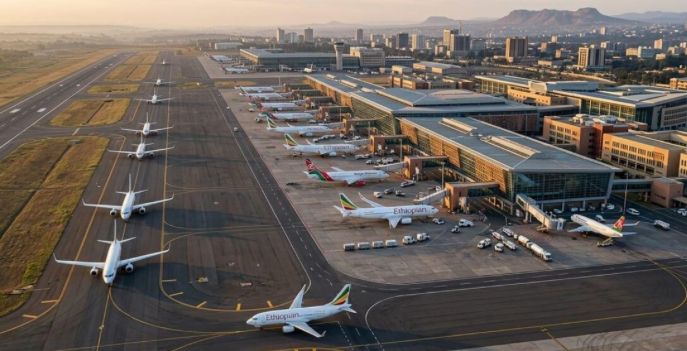
Airlines are also reshaping the landscape. Ethiopian Airlines has emerged as a dominant force, building an extensive network and turning Addis Ababa into a major aviation hub. Its success shows what is possible, but it has also increased pressure on smaller carriers struggling with limited resources and competition.
Meanwhile, international players like Emirates and Qatar Airways continue expanding across African routes, taking advantage of the continent’s connectivity gaps. This growing presence is pushing African governments to act faster to strengthen their own aviation systems.
Infrastructure development is also picking up pace. Countries including Nigeria, Ethiopia, Rwanda, and Senegal are investing in airport expansion and logistics hubs. Projects like Rwanda’s Bugesera International Airport highlight ambitions to become regional gateways for trade and travel.
Still, experts warn that building airports alone is not enough. Without strong policies, better coordination, and full implementation of open skies agreements, the continent may struggle to unlock the full benefits of aviation reform.
At its core, this push is about more than flights—it’s about Africa’s future. If governments can align policies and remove barriers, aviation could become the backbone of economic integration. But if protectionism continues, the continent risks missing a major opportunity to turn its trade ambitions into real economic power.