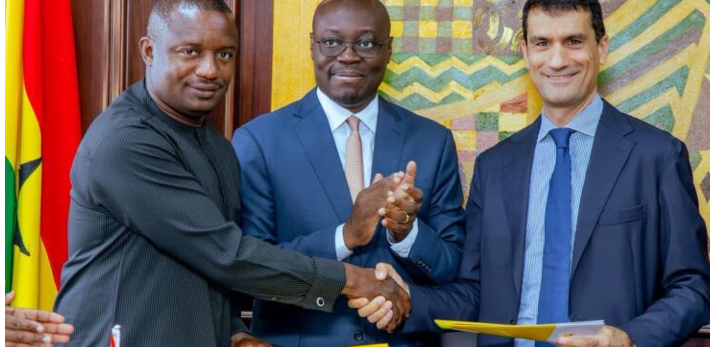
Ghana has taken another major step toward strengthening its energy sector after signing a new agreement to expand gas production from the Offshore Cape Three Points project. The deal, involving Eni Ghana E&P, Vitol Upstream Ghana Limited, and Ghana National Petroleum Corporation, is expected to reduce fuel imports and improve electricity supply stability by 2028.
Under the agreement, gas output from the OCTP project could rise to 350 million standard cubic feet per day (MMscfd), making it a key pillar of Ghana’s gas-to-power strategy. The announcement was made by John Abdulai Jinapor, who described the deal as a crucial milestone in ensuring reliable and affordable energy for both households and industries.
The expansion will focus on developing the Gye Nyame field, alongside installing a booster compressor and upgrading gas systems on the project’s floating production vessel. According to officials, this will significantly increase production capacity and strengthen the country’s ability to meet rising electricity demand.
The signing ceremony was attended by key stakeholders, including Cassiel Ato Forson, highlighting the government’s commitment to long-term energy security. The agreement also builds on earlier commitments made in 2025 to deepen collaboration and attract more investment into Ghana’s energy sector.
Currently, the OCTP project supplies a significant portion of the gas used in Ghana’s thermal power plants. Increasing domestic production is seen as essential, especially as the country continues to rely heavily on thermal generation for its electricity needs.
Energy experts say this move could help reduce Ghana’s dependence on imported fuels, which have been a major strain due to foreign exchange pressures and global price volatility. By boosting local gas output, the government aims to stabilise electricity generation and support sectors like manufacturing, mining, and services.
The expansion also comes at a time when competition for energy investment is heating up across Africa, with countries like Senegal, Mozambique, and Nigeria pushing major gas projects. Ghana’s government is therefore keen to reassure investors that its petroleum sector remains stable, open, and attractive.
Beyond economics, the project carries strong national importance. Ghana has faced recurring power challenges in the past—popularly known as “dumsor”—largely due to fuel shortages and system constraints. Officials believe that strengthening domestic gas supply is one of the most effective ways to prevent such disruptions in the future.
If successfully delivered, the OCTP expansion could play a critical role in improving electricity reliability, supporting industrial growth, and easing pressure on public finances—positioning Ghana for a more stable and energy-secure future.