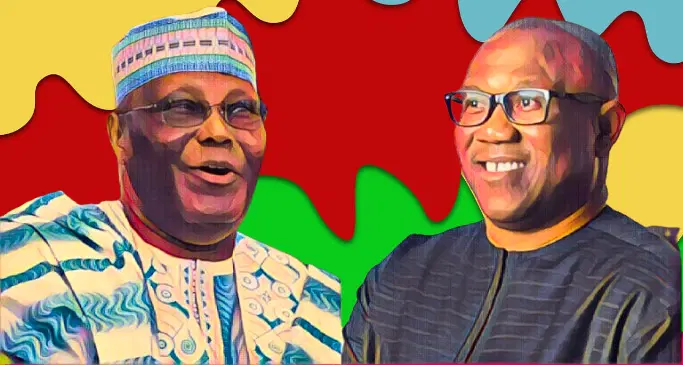
Recent remarks by former Vice President Atiku Abubakar have reignited debate over the cohesion and strategy of Nigeria’s opposition bloc ahead of the 2027 presidential election.
During an interview on Arise Television, Atiku criticised fellow opposition figures, including Peter Obi and Rabiu Musa Kwankwaso, questioning their political reach and national appeal. The comments have drawn attention, particularly given ongoing efforts among opposition actors to build a broad coalition capable of challenging the ruling party.
Observers note that the former vice president’s remarks come against the backdrop of the 2023 presidential election, where divisions within the opposition—especially within the Peoples Democratic Party (PDP)—were widely seen as a major factor in the party’s defeat. The exit of key figures and internal disagreements were cited as weakening the party’s electoral strength.
Analysts argue that unity remains a critical factor for any opposition success in 2027. In this context, public criticism among leading figures could complicate coalition-building efforts, especially as discussions around alliances and political realignments continue to evolve.
Meanwhile, both Obi and Kwankwaso have pursued separate political paths following the last election cycle, reflecting broader fragmentation within opposition ranks. Their movements across political platforms have further underscored the fluid nature of Nigeria’s political landscape.
Despite these divisions, the ruling All Progressives Congress (APC), led by President Bola Tinubu, continues to consolidate its position, with supporters pointing to ongoing governance initiatives and infrastructure projects across different regions of the country.
Political observers suggest that unless opposition parties resolve internal differences and present a unified front, their chances of mounting a strong challenge in 2027 may remain limited.