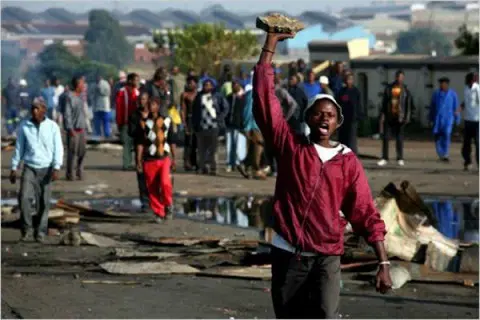
For many Nigerians living in South Africa, daily life has become increasingly defined by fear, uncertainty, and survival, as anti-foreigner protests resurface in major cities.
In recent weeks, demonstrations have spread across Johannesburg, Durban, and Pretoria, prompting many Nigerians to stay indoors or abandon their businesses over safety concerns. While authorities maintain that violence has not escalated nationwide, memories of past xenophobic attacks continue to weigh heavily on affected communities.
A Nigerian resident in Johannesburg, Oriyomi Philip, described how his family remained indoors for days following security advisories issued by the Nigerian consulate. According to him, fear has become widespread, particularly among undocumented migrants who already face challenges accessing jobs and legal protections.
Many Nigerians allege that beyond the threat from protesters, they also experience harassment from law enforcement officials. Some claim they are frequently targeted, detained, or extorted, especially when unable to communicate in local languages or provide documentation.
Another resident, identified as David, recounted losing his business and personal property during the unrest. He said he narrowly escaped harm after his vehicle was destroyed, leaving him stranded and dependent on assistance from friends and well-wishers.
With conditions deteriorating, several Nigerians have registered for evacuation programmes facilitated by the Nigerian government. However, many say financial constraints and uncertainty about reintegration back home remain major obstacles.
Community leaders, including representatives of the Nigeria Union South Africa (NUSA), have acknowledged the tensions but noted that the protests are largely concentrated in specific provinces. They attribute the unrest to broader socio-economic challenges, including unemployment and concerns over undocumented migration.
Meanwhile, advocacy groups in Nigeria have called for urgent government intervention, stressing the need for evacuation support and reintegration assistance for affected citizens.
The situation has also drawn diplomatic attention, with Nigerian authorities engaging South African counterparts to strengthen preventive measures, including a proposed early warning mechanism aimed at addressing xenophobic violence.
Despite these efforts, many Nigerians in South Africa say their immediate reality remains unchanged—one marked by anxiety, displacement, and a growing desire to return home safely.