By Adamu Bello
The Nigerian project stands at a the Rubicon. For decades, the nation has been caught in a cycle of recycled leadership, bureaucratic inertia, and a glaring disconnect between the ruling elite and the suffering masses.
As the country navigates the turbulence of the current political dispensation, the discourse has increasingly shifted toward finding a leader capable of transcending the status quo.
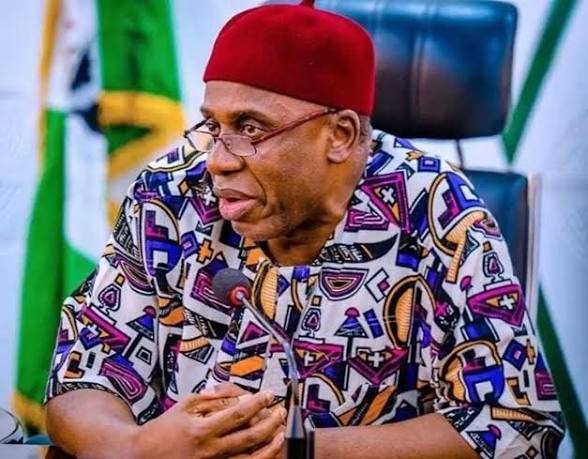
In this search for national renewal, the emergence of Chibuike Rotimi Amaechi as a presidential aspirant under the banner of the African Democratic Congress (ADC) is not merely a political development; it is an ideological signal.
Drawing on the nation’s tragic underpinning in all facets of underdevelopment, it becomes clear that Amaechi’s candidacy offers a distinct departure from the business-as-usual approach that has defined years of failed governance.
Nigeria’s governance crisis is rooted in a culture of convenience—where political parties are treated as special-purpose vehicles for patronage rather than platforms for public service. As you can see, the current national trajectory is marked by a “governance vacuum,” where those in power prioritize survival over the structural transformation of the economy and the protection of the citizenry.
Amaechi, a man whose political history is defined by confrontation with entrenched interests, offers a different path. His critique of the current crop of state governors—whom he has openly challenged for their silence in the face of widespread economic hardship—highlights a fundamental requirement for a Nigerian leader: the courage to be radical.
In a landscape defined by performative loyalty, Amaechi’s record serves as a stark reminder that leadership requires the strength to challenge the president when policies fail the people.
The African Democratic Congress (ADC) has positioned itself as a third-way alternative, providing a home for those who believe that the two-party hegemony has exhausted its utility. For Amaechi, moving to the ADC is not an act of political desperation, but one of strategic alignment.
I consistently argued that the Nigerian youth and the disenfranchised middle class are looking for a standard-bearer who possesses a track record of tangible infrastructure development. Amaechi’s tenure as Minister of Transportation—where he spearheaded the modernization of the nation’s rail system—and his time as Governor of Rivers State—where he revolutionized the education and health sectors—provide a blueprint of what is possible when political will is applied with rigor.
Amaechi’s recent skepticism regarding the “electability” of traditional power brokers underscores a critical truth: winning a party primary is not the same as winning the hearts of the Nigerian electorate. The Nigerian voter has become sophisticated.
The hunger for reform is palpable, and there is a growing consensus that the challenges facing the nation—ranging from the hidden tax burdens to the collapse of social infrastructure—cannot be solved by the same architects of the current failures.
Amaechi’s candidacy brings the radical element back into the fold. It suggests a move away from the politics of consensus (which often leads to compromise) toward the politics of results. His insistence on accountability and his refusal to bow to the pressures of conventional party politics make him a dangerous candidate to the establishment, but a compelling one to the suffering Nigerian.
To heal a nation battered by years of economic mismanagement, the next leader must possess three qualities: Administrative Competence; that is the ability to move from policy pronouncement to project execution. Second, the Political Audacity: that is the willingness to confront powerful vested interests that profit from national stagnation and lastly,
National Perspective: that is a vision that transcends ethnic and regional silos to foster a truly unified development agenda.
Amaechi’s life and career have been defined by a restless drive to push boundaries. His supporters argue that he does not seek the presidency to hold a title, but to dismantle the inefficient structures that prevent Nigeria from realizing its potential.
The 2027 election cycle will be a referendum on the soul of the nation. As Nigerians reflect on the years of failed promises and the deepening cost-of-living crisis, the choice will narrow down to a simple question: Do we continue with the politics of entitlement, or do we pivot toward the politics of performance?
By aligning with the ADC, Rotimi Amaechi has signaled that the time for polite, ineffective opposition is over. The country requires a leader who is prepared to weather the storm of reform, face the ridicule of the political establishment, and deliver the infrastructure and security that the citizens deserve. For those who believe that Nigeria’s best days are ahead, the task is clear: it is time to look past the old guard and embrace a vision of governance that is as bold and ambitious as the people it seeks to serve.
Adamu contributed this piece from Kano, Nigeria.