By Erasmus Ikhide
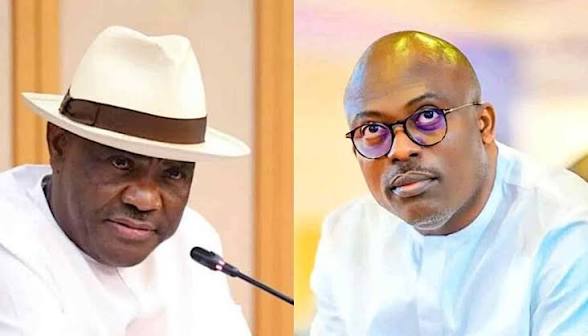
IN the theater of Nigerian politics, few spectacles have been as pathetic and soul-crushing as the political crucifixion of Rivers State Governor, Sir Siminalayi Fubara.
His recent, ignominious withdrawal from the All Progressives Congress (APC) gubernatorial primaries is not just a personal defeat; it is the final act in a tragicomedy that has exposed the terminal decay of political leadership in the South-South.
For those who watched with bated breath, hoping for a David to fell the Goliath of political godfatherism, Fubara’s surrender is a bitter, cold, and calculated betrayal of the very people he once claimed to represent.
The Architect of His Own Demise
To understand Fubara’s downfall, one must look at his origin. He was never a grassroots titan or a man of the people. His ascent to the Brick House was not predicated on an ideological manifesto or a history of public service, but on a currency that is the bane of our democracy: absolute, unquestioning sycophancy.
As the Accountant-General of Rivers State, his primary qualification was his utility as a vault-keeper for the vast, illicit wealth of his predecessor and eventual tormentor, Nyesom Wike.
He was the protégé, the safe pair of hands chosen precisely because he was perceived as a man without an ego—a man who would fold his arms and watch as his benefactor rode roughshod over the state’s resources and political architecture.
Fubara was a creature of a corrupt bargain, a secret agreement made in the dark corners of political clubs, and he entered the governorship with the shackles of that servitude already locked firmly around his ankles.
A Seminar in Weakness
The political tension between Wike and Fubara has been a spectacle of agonizing asymmetry. How does a sitting governor, possessing the formidable machinery of the state, allow a Minister—a man operating from the comfort of Abuja—to treat him like a glorified errand boy? It is a question that defies logic and speaks volumes about Fubara’s fundamental deficit in leadership.
While the people of Rivers State looked for a leader to break the cycle of godfatherism, they instead found an accountant who tried to balance the books of his own political survival with the currency of appeasement. He was a tragic case study in how not to be a governor.
His deliberate and strategic silence, which he recently invoked to dress his cowardice in the robes of statesmanship, was nothing more than a deer-in-the-headlights paralysis. You cannot fight a tiger with a feather duster, and you certainly cannot outmaneuver a master strategist like Wike by playing the role of a pious, submissive protégé.
The Myth of Father Christmas
There is a profound naivety in Fubara’s stance that he was somehow wronged by a godfather who expected a return. Politics in Nigeria is rarely altruistic; it is transactional. Fubara knew exactly who Wike was from day one. Wike is not Father Christmas, and he never claimed to be.
To enter into a partnership with a man of such insatiable political hunger while lacking the stomach for a war of attrition was a suicidal blunder. Fubara’s expectation that he could be a governor while remaining a shadow was a fantasy that collapsed under the weight of political reality.
The Final Fade: A Legacy of Opportunism
By withdrawing from the APC primaries, Fubara has effectively committed political hara-kiri. His supporters, who rallied behind the banner of resistance, have been left stranded in the cold, their hopes discarded like campaign flyers after a lost election. He has effectively faded from the consciousness of a people who once looked to him as a possible catalyst for change.
The recent court ruling—which clarified that political party membership and registration remain fluid—offered him a sliver of opportunity to pivot, to find a new platform, or to wage a true, scorched-earth war against the forces that have caged him. But Fubara seems to have chosen the path of least resistance.
If he truly bows out now, without a fight, he will not be remembered as a victim of a cruel godfather. He will be remembered as a spineless opportunist: a man who was handed power on a platter of gold, who lacked the character to defend it, and who ultimately allowed himself to be used as a burnt offering on the altar of his predecessor’s ego.
History is rarely kind to those who are conquered without a struggle. Fubara came, he saw, and he was consumed by the very machine he helped build. The tragedy is not that he lost; the tragedy is that he never truly began to lead.
Erasmus Ikhide contributed this piece from Lagos via: ikhideluckyerasmus@gmail.com