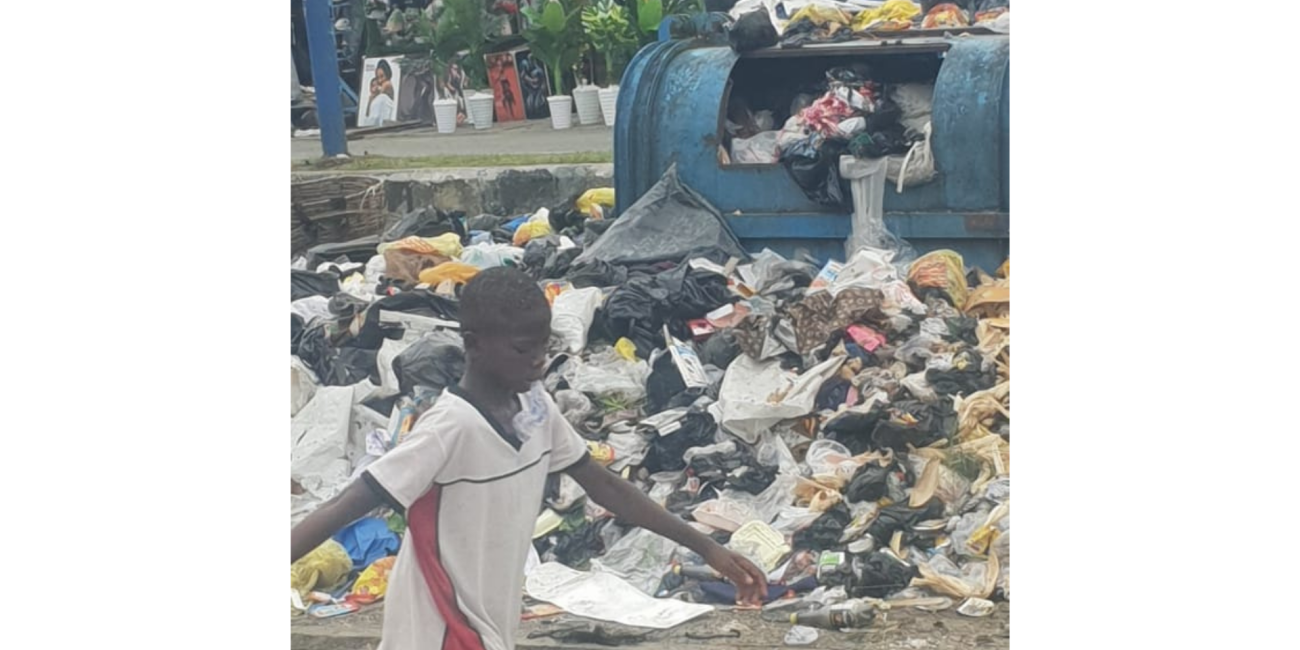
Growing heaps of uncollected refuse and the persistent stench from overflowing dump sites are raising serious environmental and health concerns across parts of Yenagoa, the Bayelsa State capital.
Residents and business owners along the Azikoro Road axis say conditions have become unbearable as waste collection points continue to overflow, filling the area with offensive odours and creating an unhealthy environment for daily living.
Commercial tricycle riders and passengers are reportedly forced to cover their noses while passing through affected areas, while some businesses located close to the dump sites have begun relocating due to the worsening situation.
Beyond the smell, drainage systems around the area have become blocked with refuse spilling into gutters, increasing fears of flooding and possible disease outbreaks if urgent action is not taken.
Findings suggest that the sanitation crisis may be connected to operational challenges involving the Bayelsa State Environmental Sanitation Authority (BESA), the agency created by Governor Douye Diri to oversee waste management and recycling in the state.
Sources familiar with the matter alleged that disagreements between the Authority and a private waste evacuation contractor over payments and operational responsibilities have slowed refuse collection efforts.
Residents say the impact is already affecting public health and local businesses.
One resident, Mr. Ebiowei Akimi, described the odour as unbearable, especially at night, saying many people in the area now constantly cough and sneeze due to the pollution.
Another resident, Mrs. Patience Ogbomo, lamented what she described as a sharp decline in sanitation standards, warning that children and vulnerable residents are most at risk.
Business owners are also counting losses. A trader near one of the affected sites, Mr. Tari Preye, said customers now avoid the area because of the smell, leading to a drastic drop in sales.
Residents are calling on the state government and environmental authorities to urgently resolve the crisis before the situation develops into a wider public health emergency.