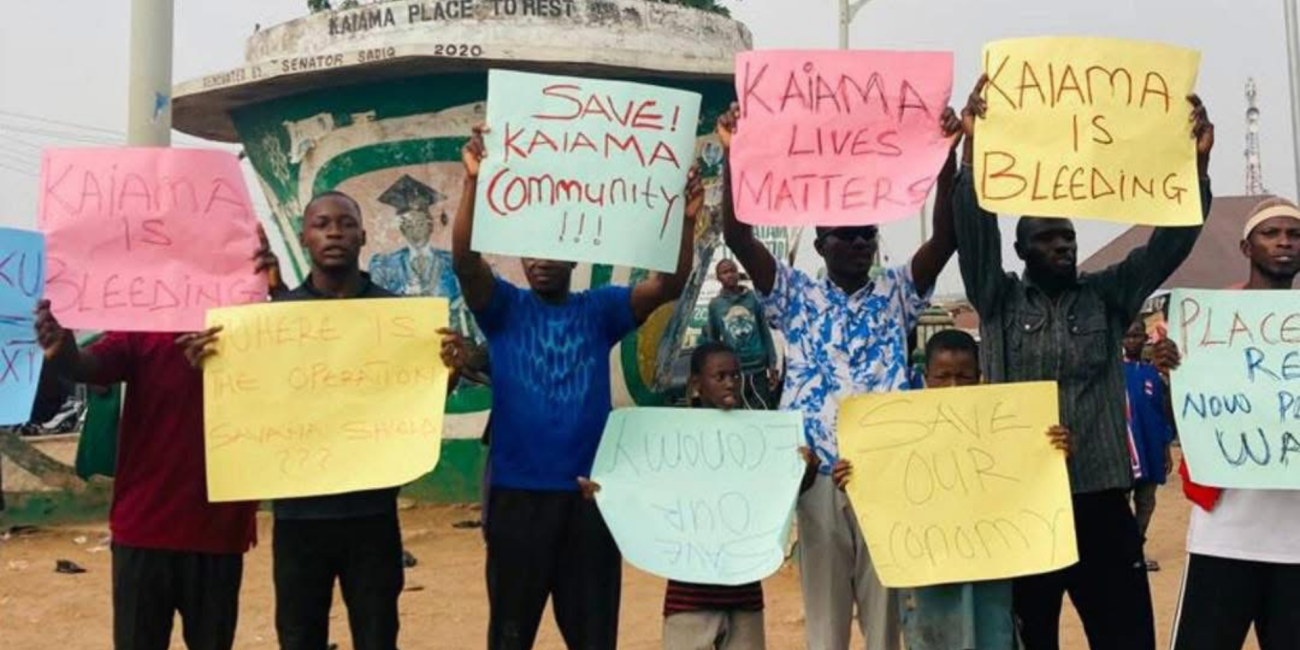
Fear turned into voices on the streets as concerned youths in Kaiama Local Government Area took to peaceful protest, demanding urgent action over worsening insecurity and the reported abduction of 176 women and children from Woro community.
Moving through parts of Kaiama town, the protesters carried placards that spoke both pain and frustration:
“Hear our voices, stop the killing. Bad road. Bad network. Bring back our women and children.”
For many of them, this was not just a protest — it was a cry for help.
The demonstration comes just a day after a deadly attack on Kemanji community, where suspected terrorists struck in the early hours, leaving destruction and fear behind.
Residents say the attackers arrived around 3 a.m., heavily armed and well-coordinated, opening fire and sending villagers running for safety.
“They came in large numbers and started shooting immediately,” one resident recalled. “The soldiers tried their best, but the attackers had already gained ground.”
Security forces, including the Nigerian Army and local vigilantes, engaged the assailants in a gun battle that lasted nearly two hours. But the damage had already been done.
At least four soldiers were killed, and a vigilante member was left critically injured.
Community sources say the attackers also used explosives on a military position — a move that weakened resistance and gave them the upper hand.
“They used explosives on the soldiers’ camp. That was what gave them the advantage,” another resident said.
In the chaos that followed, many residents went missing.
Families are now searching desperately, unsure who is safe and who has been taken.
“They took many people away… nobody knows the exact number yet,” a local source said.
The attackers reportedly fled with military patrol vehicles and motorcycles, disappearing into surrounding areas and leaving communities in fear.
Now, on the streets of Kaiama, the message from young people is clear:
They are tired of the silence.
They are tired of the fear.
And above all — they want their people back.