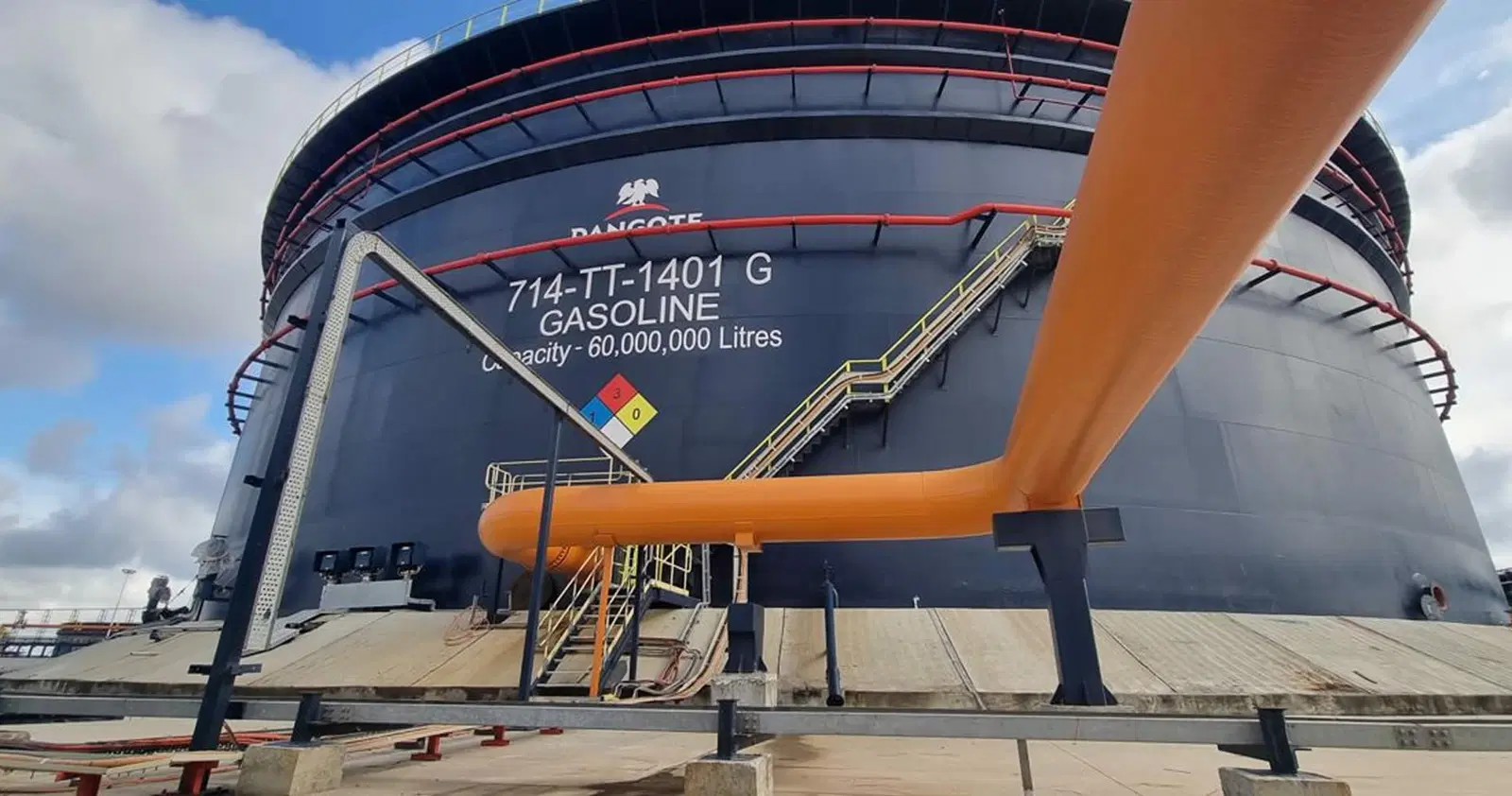
The Dangote Petroleum Refinery has taken the Federal Government to court over the issuance of fresh fuel import licences to petroleum marketing companies, escalating tensions in Nigeria’s downstream oil sector.
Despite the refinery’s growing output and its role in domestic fuel supply, the Nigerian Midstream and Downstream Petroleum Regulatory Authority (NMDPRA) reportedly issued new import licences to six major marketers in 2026, covering between 600,000 and 720,000 metric tonnes of Premium Motor Spirit (PMS).
The companies listed include NIPCO, AA Rano, Matrix Energy, Shafa Energy, Pinnacle Oil and Gas, and Bono Energy, with allocations ranging from 60,000 to 150,000 metric tonnes each.
The move comes after earlier suspension of petrol import permits by the regulator in early 2026, following claims that local refining capacity had improved significantly.
Industry data suggests the Dangote refinery now supplies over 36 million litres of petrol daily, accounting for more than 90% of Nigeria’s consumption, while imports have dropped to their lowest levels in a year.
However, in its suit filed at the Federal High Court in Lagos, the refinery is challenging the NMDPRA’s decision, arguing that continued issuance of import licences violates provisions of the Petroleum Industry Act (PIA), which allows imports only when domestic supply is insufficient.
According to the refinery, unrestricted importation undermines local refining investments and discourages further development of Nigeria’s refining capacity.
The dispute has further deepened divisions within the sector, with some stakeholders defending imports as necessary for competition and supply stability, while others warn that it could reverse gains made in reducing dependence on foreign refined products.
In a related interview monitored by Vanguard, Aliko Dangote alleged that powerful fuel importers were resisting the refinery’s operations because it threatens long-standing import-driven business interests.
He claimed that entrenched interests benefitting from past subsidy regimes and fuel import allocations were attempting to frustrate local refining progress.
Dangote also noted that the refinery project, launched in 2013, faced multiple delays and significant infrastructure challenges, including port construction and logistics demands, but insisted the project was completed despite opposition.
As legal proceedings begin, the case is expected to become a major test of Nigeria’s downstream petroleum policy and the balance between local refining and import regulation.