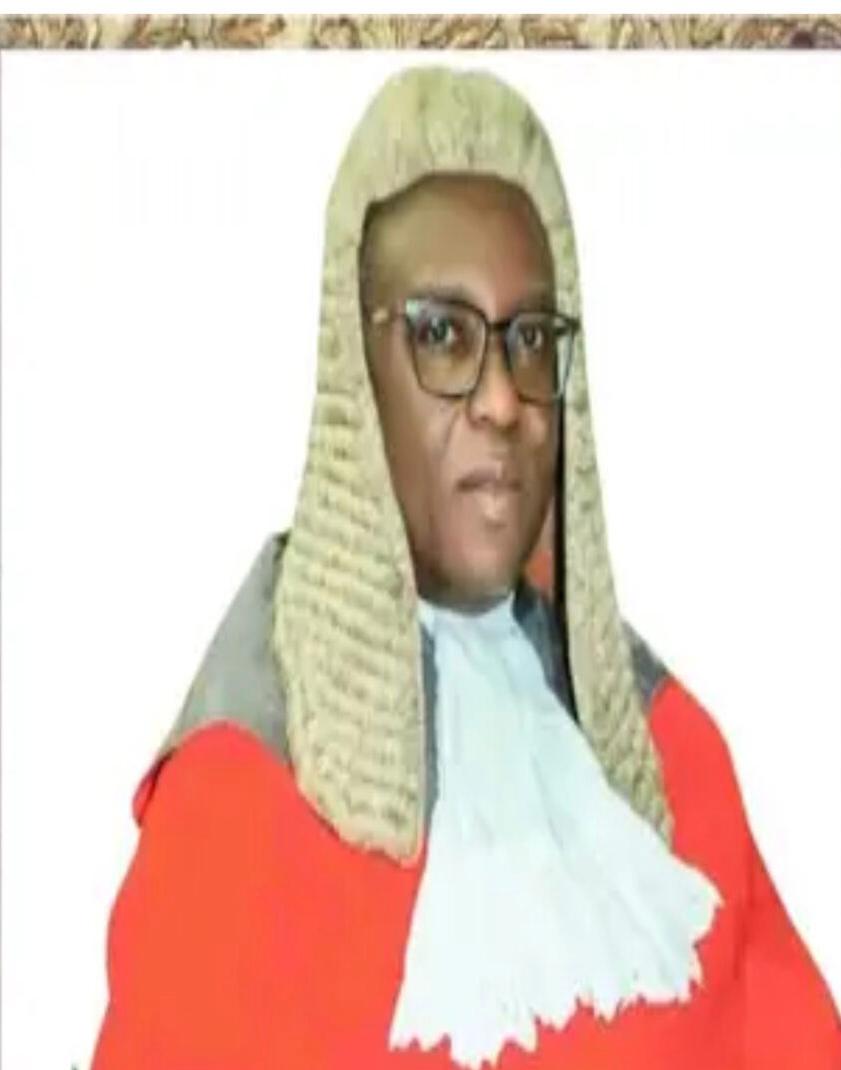
Special Correspondent, Standard Daily Press
BENIN CITY In a move that signals a full-blown damage to the office of the Edo state CJ and a direct challenge to the authority of the National Judicial Council (NJC), the Chief Judge of Edo State, Hon. Justice Daniel Iyabosa Okugbowa, has again allegedly descended into a theater of judicial mutiny.
Despite a formal indictment and a direct order from the NJC to return the case file of the N5 billion libel suit between Barrister Mike Igini and Col. David Imuse (Rtd) to the trial judge, Justice Okugbowa is reportedly holding the wheels of justice in a chokehold, web of conspiracy designed not to allow the five-year-old matter to proceed.
A Pattern of Defiance
This is not the first time Justice Okugbowa has found himself in the crosshairs of judicial regulators. Last year, the NJC issued a query to the Chief Judge for abusing his administrative powers in this same case.
The Council’s intervention was meant to end the CJ’s “de novo” gambit—a strategy where he sought to restart the trial afresh, effectively erasing four years of evidence and testimony during which period one of the claimant witnesses died.
In its last sitting, the NJC was unequivocal: The case must not be started de novo. The Council directed that the file be returned to the original trial judge, Hon. Justice V.O. Eboreime, to complete the proceedings.
However, inside sources and recent court developments reveal a “web of conspiracy” designed to frustrate that order with yet another frivolous petition against the trial judge.
The “New Petition” Stalling Tactic
Following the NJC’s reprimand, the case file was briefly returned to Justice Eboreime, but the reprieve for justice was short-lived. In what observers describe as a synchronized maneuver, the 1st Defendant, Col. David Imuse, reportedly filed yet another frivolous petition to the NJC against the trial judge.
While the trial judge demonstrated exemplary compliance by responding to the petition within 24 hours as directed by NJC protocols, the administrative machinery of the Edo State Judiciary has reportedly ground to a halt.
At the adjourned date of February 2, 2026—the day set for Col. Imuse to finally open his defense—the court did not sit.
The Hostage-Taking of the Law
For over two months, the courtroom has remained silent. Sources close to the matter suggest an aggrieved Chief Judge is utilizing the quiet power of the registry and administrative “non-sittings” to ensure the case never reaches a verdict.
This administrative blockade is particularly egregious given the status of the proceedings. The Claimant (Mike Igini) has closed his case.
The 2nd and 3rd Defendants (The Tribune and The Sun newspapers) have opened and closed their defenses. Only the 1st Defendant, Col. Imuse, remains.
By preventing the trial judge from sitting, the Chief Judge is effectively granting the 1st Defendant an indefinite stay of proceedings, ignoring the NJC’s recent circular which mandates that petitions should not stop a judge from hearing a matter that has reached an advanced stage.
A Breach of the Social Contract
The implications of this defiance extend far beyond a libel suit. It represents a moral destitution at the peak of the state’s temple of justice.
When a Chief Judge ignores the oversight of the National Judicial Council, he is not just fighting a peer; he is shredding the social contract. He is telling the Nigerian citizen that the “Rule of Law” is subordinate to the “Rule of the CJ.”
As the NJC prepares for its next quarterly review, all eyes are on Abuja to see if the Council will allow its directives to be treated as mere suggestions by a state official.
For Mike Igini, and indeed for the credibility of the Nigerian judiciary, justice remains under arrest in Benin City, and the handcuffs are held by the very office sworn to break them.