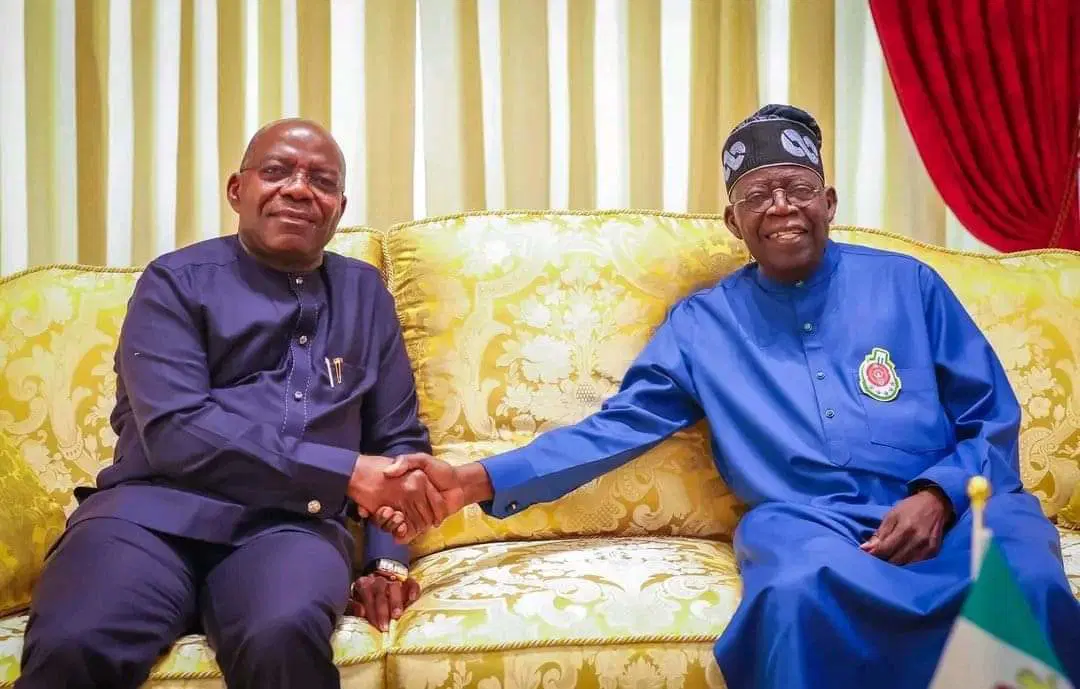
Nigeria’s political landscape took a dramatic turn as a faction within the Labour Party signaled support for the re-election bid of President Bola Ahmed Tinubu in the 2027 general elections, further exposing deep divisions within the party.
The declaration was made by Abayomi Arabambi, who revealed that key figures within the party, including Alex Otti, had reached a consensus to align with Tinubu’s second-term ambition. According to him, the decision is rooted in a broader political understanding that the presidency should remain within the South-West geopolitical zone to complete what he described as an “eight-year cycle.”
Arabambi’s comments suggest a strategic recalibration within parts of the party, one that prioritizes regional political balance over opposition unity. However, this position appears far from universally accepted within the Labour Party, which has struggled with internal disagreements since the 2023 elections.
Obi’s Return Rejected Amid Deepening Party Crisis
In a move that underscores the widening cracks within the party, Arabambi categorically ruled out any possibility of Peter Obi returning as the party’s presidential candidate. Obi, who was the Labour Party’s flagbearer in 2023, remains a central figure in Nigeria’s opposition politics, making his exclusion a significant development.
Arabambi attributed the decision to ongoing internal crises and agreements reached among party leaders, stating that the party has moved beyond Obi’s candidacy. His remarks also cast doubt on ongoing efforts by Nenadi Usman, who has reportedly been advocating for Obi’s return to the party.
Dismissing her efforts, Arabambi accused Usman of acting in Obi’s interest, suggesting that her push is driven by concerns over Obi’s chances of securing a ticket under a broader opposition coalition, particularly within the African Democratic Congress.
Opposition Unity Faces New Test
The development raises fresh questions about the future of opposition politics in Nigeria ahead of the 2027 elections. With divisions deepening within key opposition parties, the possibility of presenting a united front against the ruling party appears increasingly uncertain.
While Arabambi’s position reflects the stance of a faction, it remains unclear whether it represents the official position of the Labour Party as a whole. Nonetheless, the endorsement of Tinubu by any segment of the opposition could significantly reshape political alliances and electoral strategies in the coming years.
As Nigeria moves closer to another electoral cycle, the unfolding dynamics within the Labour Party may prove decisive—not only for its internal cohesion but also for the broader balance of power in the country’s evolving political landscape.