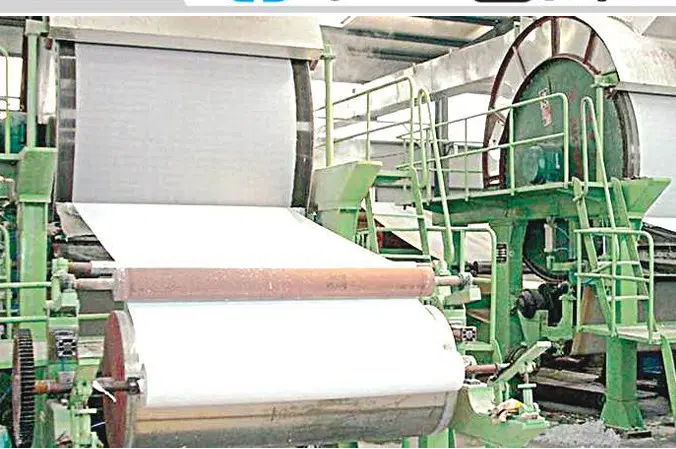
Nigeria is losing an estimated ₦674 billion annually to foreign paper producers as the country’s once-thriving paper industry has nearly collapsed, leaving it heavily dependent on imports to meet local demand.
Data from the National Bureau of Statistics shows that the nation’s paper import bill has risen sharply in recent years, increasing from ₦328.9 billion in 2021 to ₦1.11 trillion in 2025. Over a five-year period, total imports exceeded ₦3.37 trillion, while exports remained marginal, growing from ₦2.17 billion to just ₦19.6 billion.
The figures highlight a widening gap between demand and domestic production, with local manufacturers now supplying less than 10 per cent of national needs, estimated at over three million metric tonnes annually. As a result, Nigeria imports more than 90 per cent of its paper requirements from countries such as China, India, Indonesia, and the United States.
Industry analysts attribute the decline to the collapse of key paper mills established between the late 1960s and 1980s, including the Nigerian Paper Mill in Jebba, the Iwopin Pulp and Paper Company in Ogun State, and the Nigeria Newsprint Manufacturing Company in Akwa Ibom State. Once major contributors to local production and exports, these facilities shut down by the early 2000s due to mismanagement, outdated equipment, lack of investment, and inconsistent government policies.
The collapse has had significant economic consequences, including the loss of an estimated 300,000 jobs across the paper value chain and increased pressure on Nigeria’s foreign exchange reserves. It has also driven up costs in sectors that rely heavily on paper, such as education, publishing, packaging, and manufacturing.
Stakeholders, including the Manufacturers Association of Nigeria, say the sector now operates on the margins, contributing less than 0.2 per cent to the country’s Gross Domestic Product. They cite high operating costs, unreliable power supply, difficulty sourcing raw materials, and policies that favour imports as major challenges facing local producers.
Despite the decline, experts insist the sector still holds potential for revival, noting that Nigeria has abundant raw materials for paper production, including bamboo, rice straw, and sugarcane waste. However, they stress that meaningful recovery will require significant investment, policy reforms, and a more supportive business environment.
Without urgent intervention, analysts warn that Nigeria will continue to rely on costly imports, missing opportunities to create jobs, boost industrial growth, and retain value within its economy.