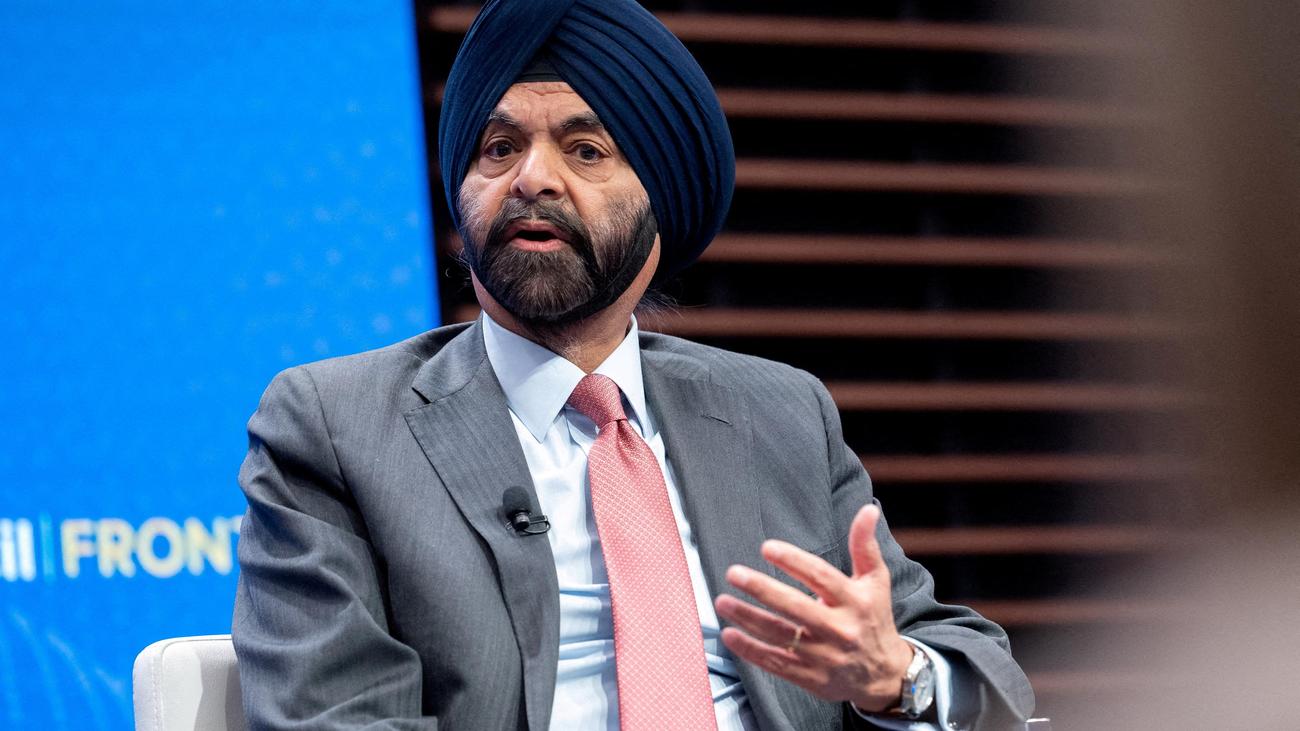
The World Bank wants to mobilize financial aid of up to 100 billion US dollars for states that have been particularly badly affected by the Middle East war. World Bank President Ajay Banga announced this on the sidelines of the spring meeting of the World Bank and International Monetary Fund (IMF) to. Accordingly, the World Bank will provide between $80 and $100 billion over the next 15 months to cushion the economic consequences of the war.
Such an aid package would be larger than the support that countries received in the wake of the corona pandemic. At that time, around $70 billion was made available.
An initial 20 to 25 billion dollars could be made available in the next few months, said Banga. The affected countries could also access up to ten percent of the aid that has already been promised earlier than planned. In about six months, another $30 to $40 billion could follow through reallocation of existing programs. It will probably take longer until the remaining help is available.
World Bank board warns of job losses and hunger
With the announcement, the World Bank and IMF their growing concern about the economic impact of the crisis in the Middle East. Because of the sharp rise in energy prices, the IMF previously announced its global growth forecast reduced to 3.1 percent. Without the war, the forecast would have been raised slightly to 3.4 percent.
The head of the World Bank, Paschal Donohoe, also warned of the loss of millions of jobs and more difficult access to food in emerging and developing countries in view of the Iran war. “We are very concerned about the impact this conflict could have on the availability and prices of food,” Donohoe said on Tuesday. Up to 15 million jobs could be lost. According to the United Nations World Food Program, up to 45 million additional people could go hungry by mid-2026 because of the war.
The global economy could recover quickly if the Iran war ends quickly, said IMF chief Kristalina Georgieva. However, if this drags on over the summer, the situation will continue to worsen. Both Banga and Georgieva urged countries to rely on targeted and time-limited aid instead of broad subsidies that could further fuel inflation.