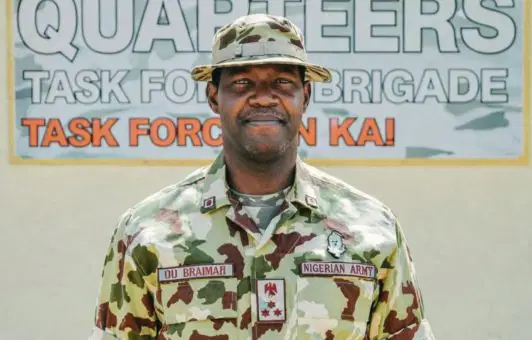
The death of Oseni Braimah is not just another statistic in Nigeria’s long-running insurgency—it is a deeply personal tragedy that captures the human cost of war. On the night of April 9, 2026, the senior officer was reportedly on a routine midnight call with his twin brother in the United Kingdom when an unexpected disturbance interrupted their conversation. Moments later, the line went dead.
That silence would become permanent. Unknown to his brother at the time, the Nigerian Army base in Benisheikh, Borno State, was under attack. Repeated attempts to reconnect failed, turning concern into dread as hours passed without a response. By early morning, the devastating news arrived: Brigadier General Braimah had been killed alongside other soldiers during the assault.
The story reflects a bond beyond duty—two brothers who spoke almost every day, separated by distance but united by routine. That night’s call, meant to be ordinary, became their final connection. For the family, the pain is not only in the loss but in the haunting abruptness of that last moment.
In the aftermath, Monday Okpebholo of Edo State announced full educational scholarships for the late general’s three children. The gesture, while unable to replace their father, offers a measure of stability and recognition of the sacrifice he made in service to the nation.
Beyond the personal grief lies a broader reflection of the ongoing conflict in northeastern Nigeria. Officers like Braimah were not just strategists or commanders—they were fathers, brothers, and sons, carrying both the weight of national security and the quiet routines of everyday life.
His legacy is one of discipline, service, and sacrifice. But perhaps most poignant is the image of a brother on the other end of a call, waiting in vain—reminded that behind every headline is a human story, often unfinished.